AOV mechanics
Average order value is one of the few DTC levers that improves the economics directly. Lift AOV and you put more contribution margin into an order that’s often running at a first-order loss, which widens the acquisition cost you can afford and spreads broadly fixed shipping and fulfilment across more revenue. It’s also one of the few levers that doesn’t depend on winning more traffic, which is why it tends to be under-worked relative to its leverage.
The mechanics fall into three groups.
Thresholds
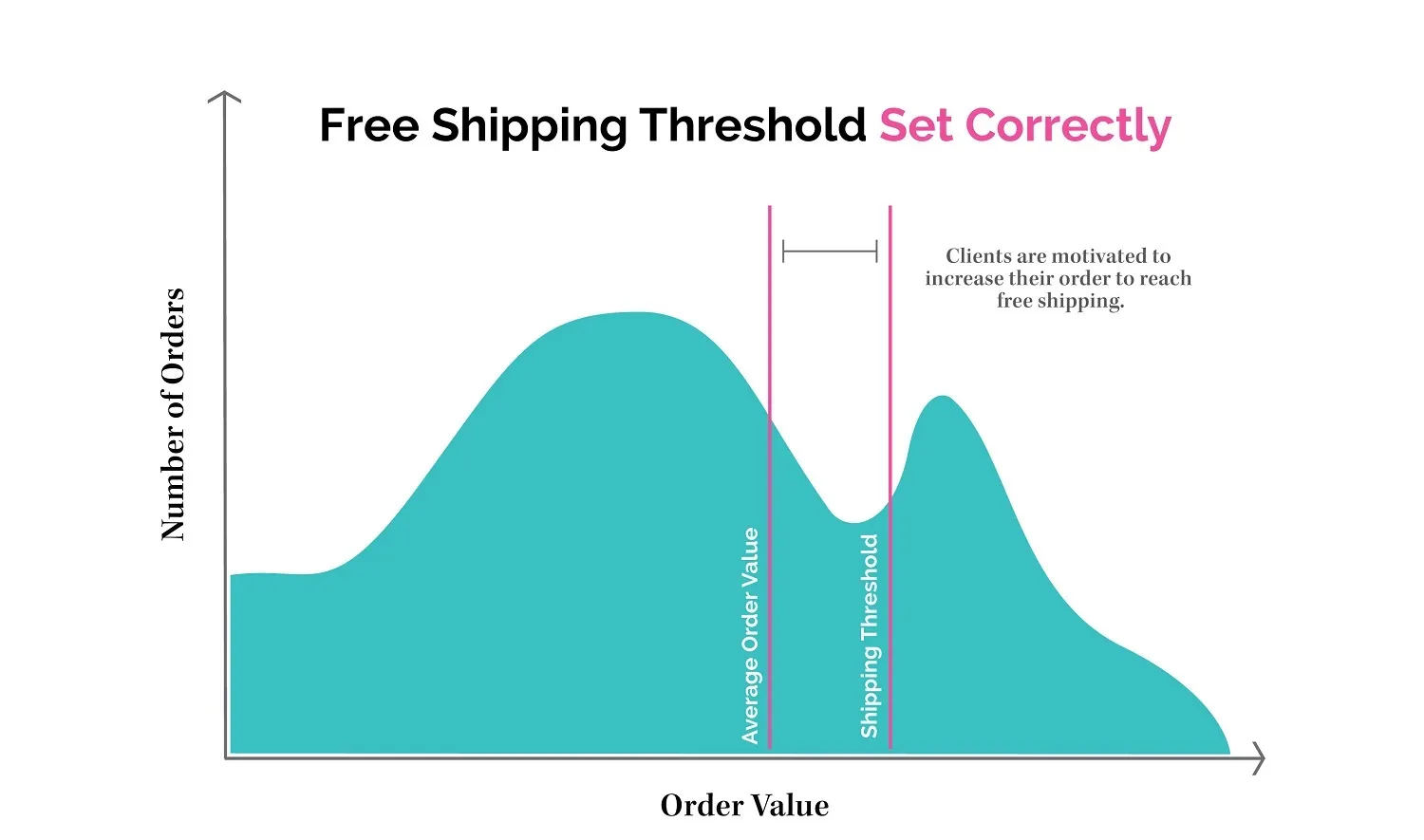
Section titled “Thresholds”A free-shipping or gift threshold set just above the natural order value gives customers a reason to add one more item. The classic move: if AOV sits at £45, a free-shipping bar at £50 nudges a chunk of orders up to clear it. A progress indicator towards the threshold makes the pull stronger, because people accelerate towards a goal they can see themselves approaching. The threshold has to be set against margin, though - set it too low and you’re funding shipping on orders that don’t cover it.
Bundles
Section titled “Bundles”Packaging products together reframes the same items as a single, higher-value offer. A bundle works on more than price - it removes the paralysis of building an order item by item, and a well-constructed starter set can convert better than the individual products because it answers “what should I buy” for the customer. Bundles also lean on anchoring: showing the summed individual price next to the bundle price makes the saving concrete.
Upsells and cross-sells
Section titled “Upsells and cross-sells”The highest-margin AOV lever is the post-purchase one-click upsell, offered after the card details are in but before the confirmation. Friction is near zero because payment is already captured, and intent is high because the customer is in a buying state. Pre-purchase cross-sells - “frequently bought with” - work too, but carry more risk of distracting from the conversion that’s already happening.
Where it backfires
Section titled “Where it backfires”- Lifting AOV by discounting the add-on. If the extra item only sells because it’s marked down, you’ve grown order value and shrunk margin, which defeats the purpose. The point of AOV work is more contribution, not more revenue at any cost.
- Cluttering the path to purchase. Aggressive cross-sells and pop-ups on the product and cart pages can suppress the core conversion to chase a bigger order. The post-purchase slot exists precisely because it lifts AOV without taxing the main conversion.
- Choosing a threshold by gut. The free-shipping number is a margin decision, not a round number that looks nice. Set it where the incremental margin from larger orders covers the shipping you’re giving away.