System 1 vs System 2
Daniel Kahneman’s Thinking, Fast and Slow popularised a two-system model of cognition:
- System 1 - fast, automatic, intuitive, emotional. Pattern-matches against past experience. Cheap to run, dominates most decisions. Operates on heuristics and biases.
- System 2 - slow, deliberate, analytical. Reasons through problems. Effortful, easily fatigued, only engages when System 1 can’t resolve the situation alone.
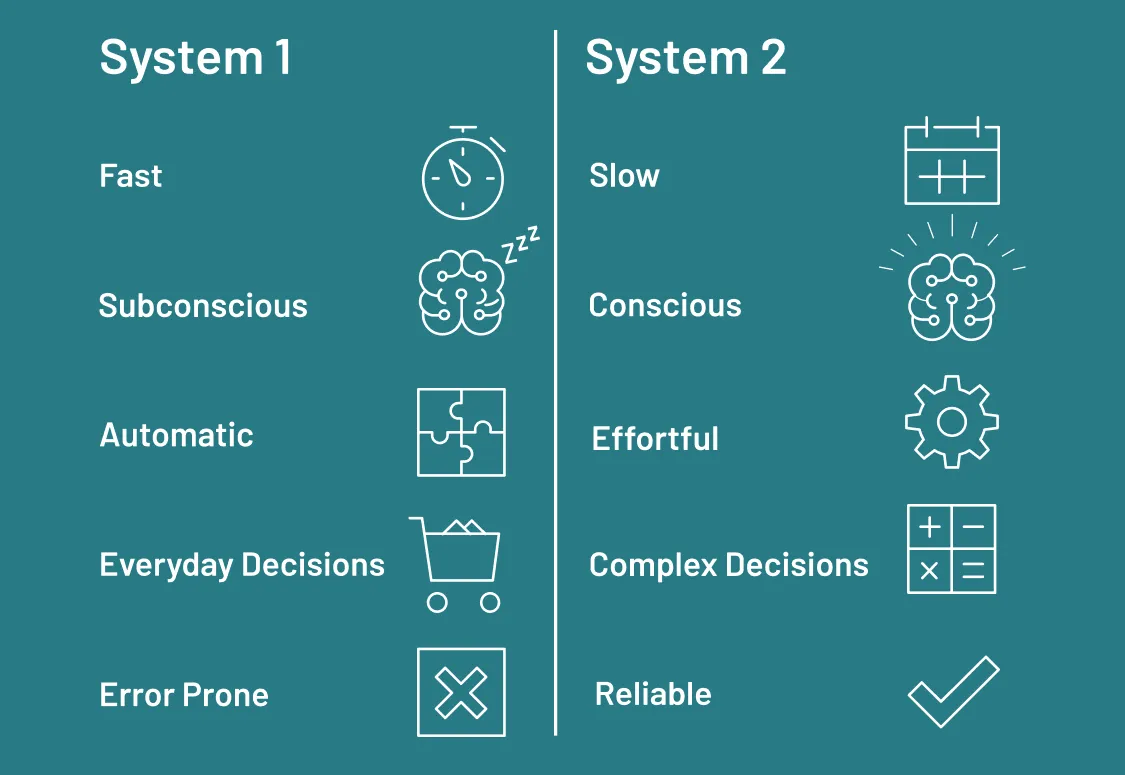
The two systems aren’t anatomically distinct. They’re a useful metaphor for two modes of processing. Most decisions are System 1. The System 2 decisions are the ones where the stakes feel high enough to override the default.
How this maps to CRO
Section titled “How this maps to CRO”Most conversion decisions are System 1. A returning customer adding a familiar product to cart, a brand-loyalist checking out, an impulse purchase from a Facebook ad. System 1 dominates because the decision feels low-stakes and the visitor has implicit cues about whether to trust the site.
This is why most CRO interventions that “win” are System 1 cues:
- Trust signals (reviews, press logos, secure-checkout badges). System 1 pattern-matches to “this looks legitimate”.
- Social proof. “Others bought this” is processed as a heuristic, not a deliberate evaluation.
- Anchoring and price displays. The comparison shortcuts deliberation.
- Loss aversion framing. Immediate gut reaction to threatened loss.
When System 2 engages, the rules change. High-stakes purchases (expensive products, B2B SaaS, life decisions), unfamiliar brands, and visitors who’ve been burned before all trigger more deliberate processing. System 2 buyers want detailed information, comparisons, proof, and time. The same trust badges that close System 1 buyers feel insufficient or even manipulative to System 2 buyers.
Designing for both
Section titled “Designing for both”The honest CRO move is to provide both layers:
- Surface-level cues that close System 1 buyers efficiently (clear price, strong CTA, trust signals, fast page).
- Deeper-level content available for System 2 buyers (detailed specs, comparison tables, FAQ, case studies, return policy).
Hide the depth behind progressive disclosure (collapsible sections, secondary pages) so it doesn’t slow down the System 1 path. Let the System 2 buyer find it when they’re looking for it.