Loss aversion
Loss aversion (Kahneman and Tversky’s prospect theory) is the asymmetry where losing X hurts more than gaining the same X feels good. The ratio is roughly 2:1 - a £100 loss hurts about twice as much as a £100 gain pleases.
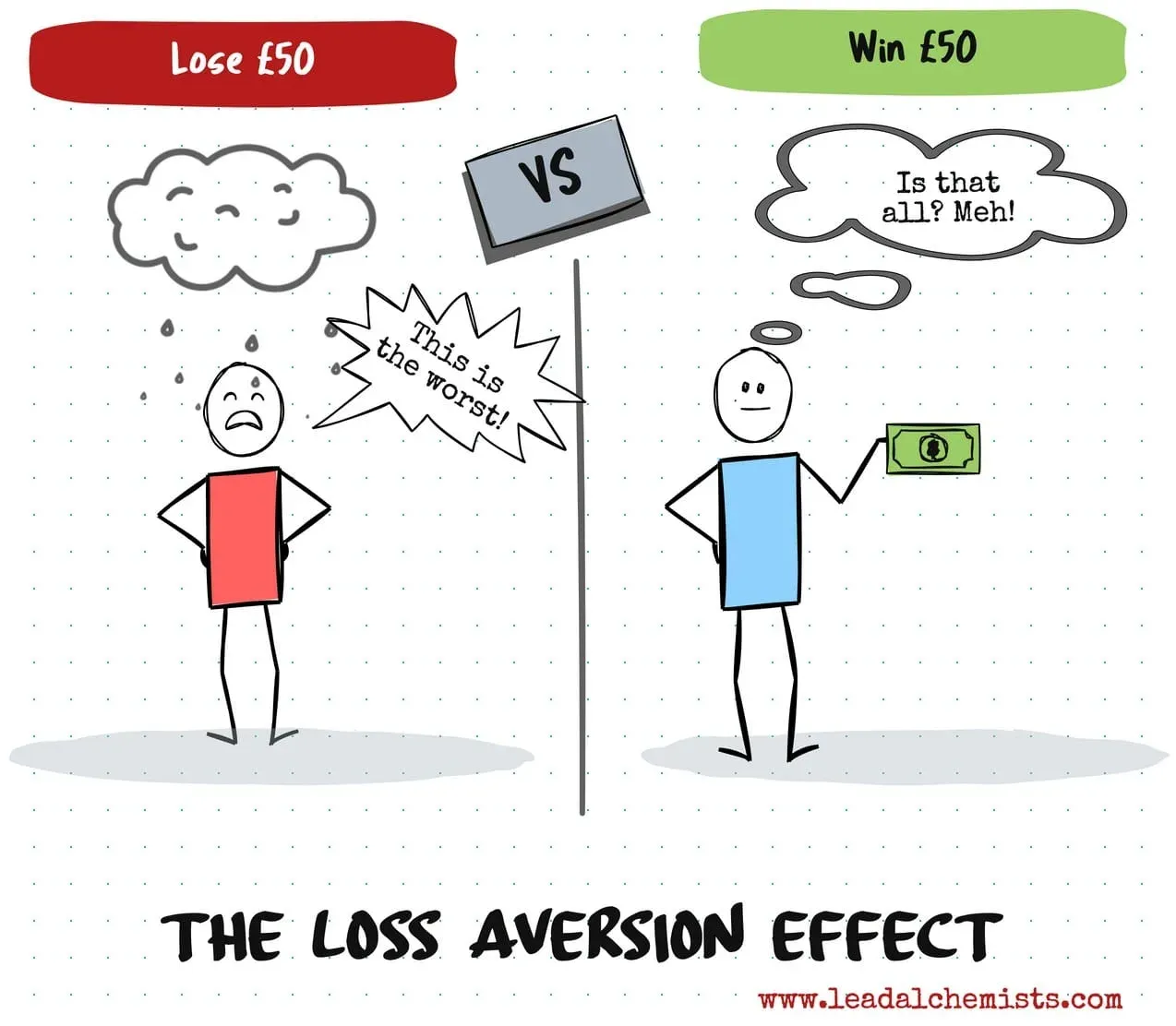
Most of CRO leans on this without naming it. Reframing “save £20” as “don’t miss out on £20 off” usually outperforms because the second phrasing makes the savings feel like an impending loss rather than a gain to chase. Money-back guarantees work because they convert the purchase decision from “potential loss of £50” to “no possibility of loss”. Free trials remove the loss from the trial period and rely on commitment bias kicking in by the time payment is due.
Where it shows up in CRO
Section titled “Where it shows up in CRO”- Risk reversal - guarantees, free returns, money-back windows. All explicit attempts to remove the perceived loss from the buying decision.
- Urgency mechanics - “sale ends tonight”, “only 3 left”. Position the choice as “buy now or lose access” rather than “buy now or buy later”.
- Anchoring and discounts - the anchoring effect interacts with loss aversion. Showing a higher original price next to a discounted one makes the discount feel like a loss avoided.
- Trial signups - free trials front-load the gain and back-load the loss, exploiting the asymmetry. Cancellations are higher near the billing date because that’s when the loss becomes salient.
- Cart abandonment emails - “you left something behind” frames the abandonment as a loss-in-progress.
Why it’s the most overused bias
Section titled “Why it’s the most overused bias”Loss aversion tactics work, which is why every marketer reaches for them. Used well, they nudge a genuine buyer over the line. Used badly, they manufacture losses that aren’t real (“only 2 hours left!” on a sale that runs every week) and the customer notices.
The trust cost of fake loss aversion is bigger than people think. The first time a customer realises the countdown timer resets when they refresh the page, they don’t just leave that test. They mistrust the rest of the site.
Two things temper how far you can push it. The effect isn’t universal - it varies by person, by category, and by whether the loss is monetary, social or emotional, and some buyers simply don’t respond to scarcity at all. And it’s a System 1 reaction, so it dominates fast decisions and gets overridden on reflection. That combination is why heavy use tends to win in the test window and lose on returning customers, who have had time to reflect and now recognise the mechanic.
Worth separating from the endowment effect, which gets used interchangeably. Endowment is specifically “I value this more because it’s mine” - the reason free trials and easy returns work once the product is in hand. Loss aversion is the broader asymmetry that endowment is one consequence of.