Traffic temperature
Traffic temperature is the rough qualifier marketers use for how much prior context a visitor has when they hit the site:
- Cold - never seen you before. You’re interrupting them. Paid social to a broad interest-based audience, display ads, top-of-funnel content distribution.
- Warm - has seen you before. Retargeting audiences, blog readers, email subscribers, returning site visitors.
- Hot - actively looking for you or something like you. Brand search, abandoned-cart visitors, “best X” comparison search, direct traffic.
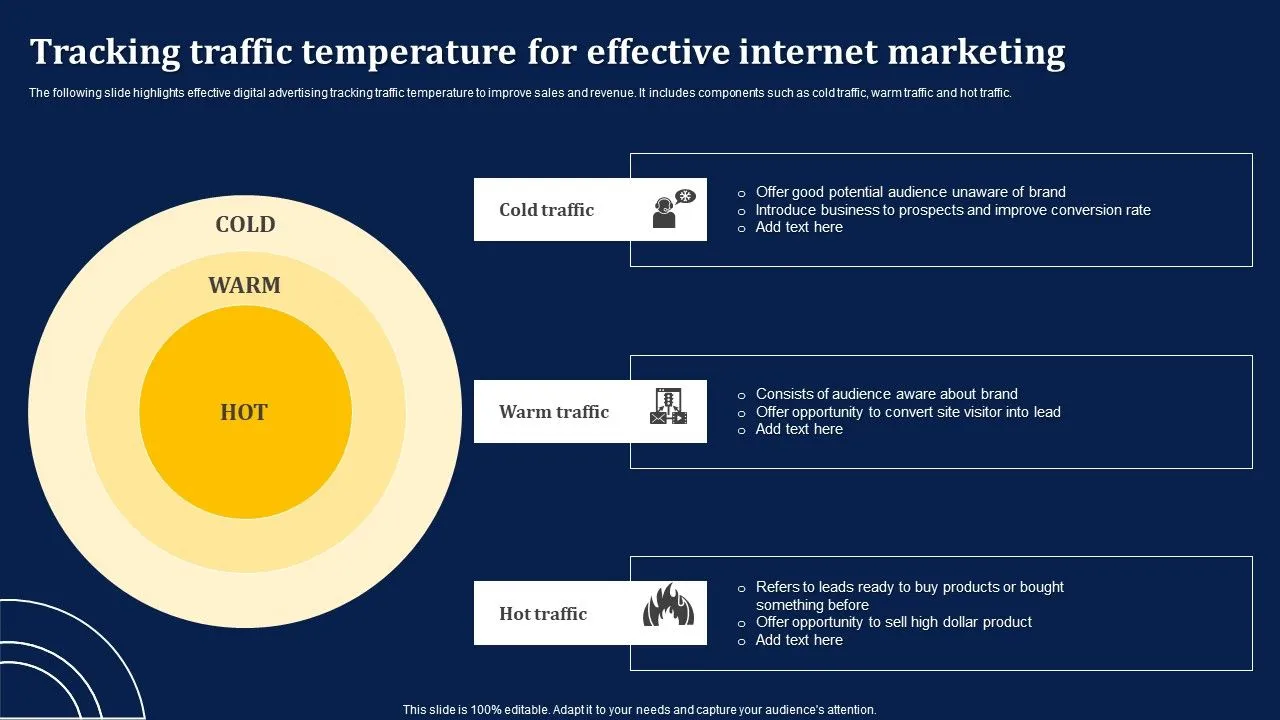
The classification is fuzzy on the edges but useful in practice. It maps roughly onto the buyer journey and awareness stages framework - cold is usually unaware or problem-aware, hot is usually product-aware or most-aware.
Why it matters for CRO
Section titled “Why it matters for CRO”Same page, different traffic, can mean a 10x difference in conversion rate. If your homepage converts at 4% on average, that 4% is hiding a 1% rate on cold paid traffic and a 12% rate on brand search. Optimising “the homepage conversion rate” is meaningless without knowing the temperature mix.
It follows that a test on blended traffic can produce a winner that’s losing on most of it. A headline that lifts brand search enough to carry the average while quietly suppressing cold paid will report as a win and get rolled out to everyone, including the segment it hurts.
Practical consequences:
- Cold traffic needs more page. More problem framing, more proof, more risk reversal. A short landing page that works for hot traffic will lose money on cold.
- Hot traffic needs less page. They’ve already decided to buy something in the category. They just need to confirm you’re the right choice. Heavy explainer content wastes their time and adds friction.
- The offer shifts by temperature. Cold traffic responds to risk reversal (guarantees, free trials). Hot traffic responds to urgency and bonuses, they’re already convinced and they need a reason to act now.
The buckets are cruder than they look
Section titled “The buckets are cruder than they look”Three ways the model oversimplifies, all of which matter once you start building pages against it.
- Temperature isn’t a property of a channel, it’s a property of an impression. The third visitor from a TikTok campaign is warmer than the first, because they’ve seen you twice already. Retargeting exists precisely to move paid traffic up the scale, so “cold paid” describes a starting condition rather than a fixed audience.
- Hot isn’t the same as ready. Hot traffic has decided to buy something in the category and hasn’t decided it’s you. That’s a different job from closing - it’s comparison, reassurance and specifics, not urgency. Treating hot traffic as pre-sold is how you end up with a page that pushes hard on a decision the visitor hasn’t reached.
- Cold contains multitudes. Cold traffic from a problem-aware audience needs a completely different page from cold traffic that doesn’t know the category exists. One landing page for “cold paid” flattens a distinction that’s usually worth more than anything else you’d test on it.