Anchoring effect
The anchoring effect (Kahneman and Tversky) is that when people are estimating a value - price, quantity, probability - the first number they encounter heavily influences their estimate, even when it’s arbitrary or obviously irrelevant. The anchor pulls subsequent estimates toward itself.
In pricing it’s the engine behind every “was £199, now £99” display. The first number sets the reference. The second feels like a discount even if the first was inflated or never really charged. The same £99 product feels expensive next to £49 alternatives and cheap next to £299 ones.
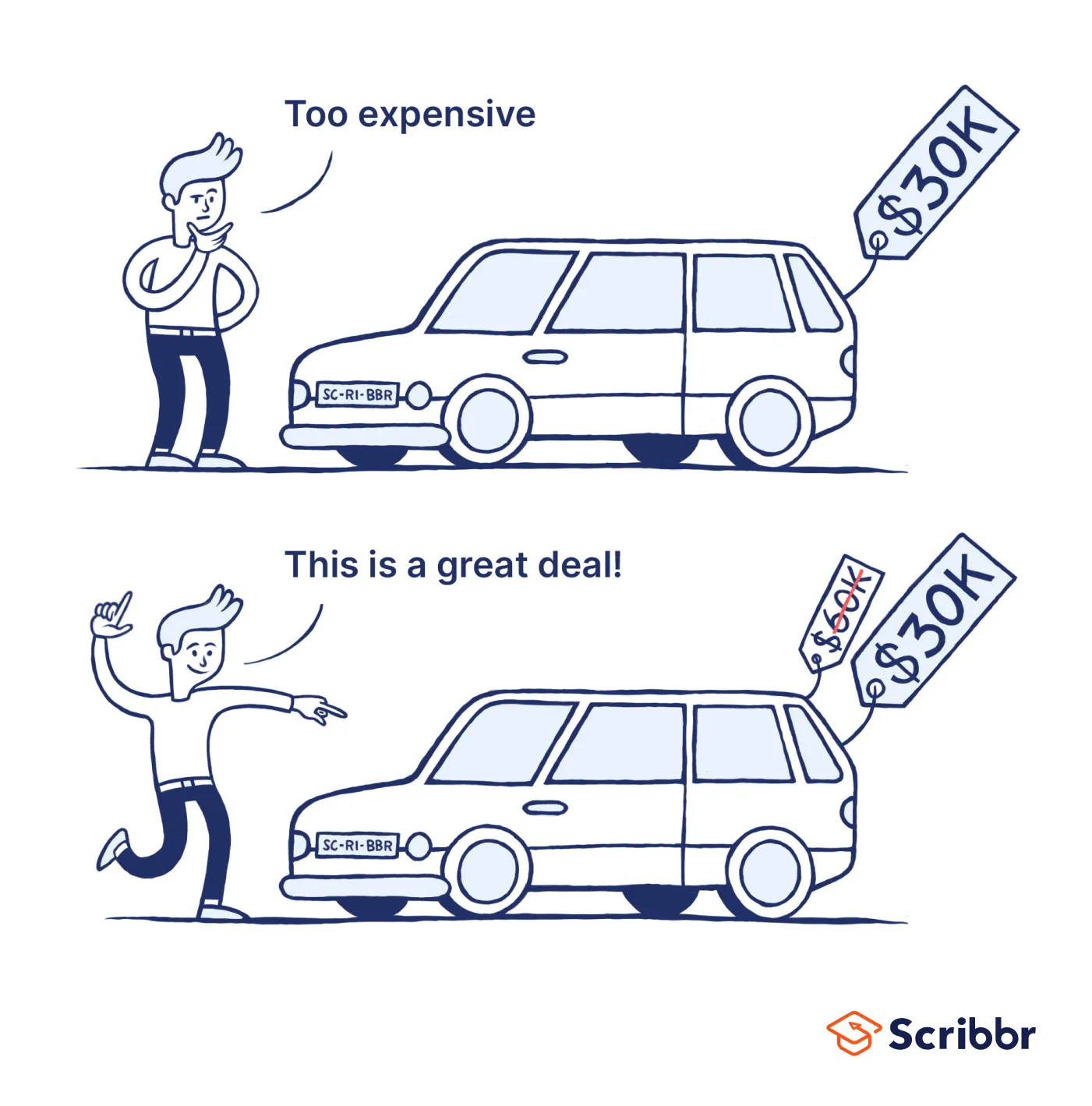
Anchoring is a System 1 effect. The first number is processed before deliberation kicks in, which is why even visitors who “know” the trick are still influenced by it.
Where it shows up in CRO
Section titled “Where it shows up in CRO”- Price displays - showing a crossed-out higher price next to the actual one. The crossed-out price is the anchor.
- Tiered pricing - the middle tier feels reasonable because the top tier anchors high. SaaS pricing pages live on this trick.
- Decoy pricing - adding a third option specifically to make another look better. The Economist’s three-tier subscription where the print-only option exists to make print+digital look like a steal is the textbook example.
- Bundles - “£120 worth of products for £49” anchors against the bundle’s stated value rather than the products’ individual prices.
- First product shown - the price of the first product on a category page anchors expectations for the whole category.
Price is where everyone reaches first and it’s the smallest part of the surface. Any first number sets a reference, so quantity anchors (“buy 12, save 30%”), time anchors (“a 4-week programme”), and social anchors (“join 10,000 members”) all do the same work. The unclaimed ground on most sites is in those, not in another crossed-out price.
Why it’s hard to test cleanly
Section titled “Why it’s hard to test cleanly”Anchoring effects are heavily context-dependent. The same anchor that works on cold traffic might not work on warm traffic who already have their own internal reference price. Repeat customers anchor on what they’ve paid before, not on whatever you display today.
Most “winning” pricing tests are anchoring tests in disguise. The conversion lift isn’t because the new price is fundamentally better, it’s because the new price display set a different anchor. This matters because lifts from anchoring don’t always replicate cleanly when traffic mix changes.
The credibility ceiling
Section titled “The credibility ceiling”Higher anchors do not monotonically win. Past some point the anchor stops being a reference and starts being a claim the visitor evaluates, and once they’re evaluating it they’re evaluating you. A “was £999” that no human ever paid reads as insulting the moment it’s noticed, and the damage isn’t confined to the price - it makes every other number on the page negotiable.
Anchor against something real where you can: competitor pricing, your own premium tier, RRP, the cost of the problem going unsolved. Those survive scrutiny, which matters because the anchor is doing double duty with loss aversion - it’s setting the size of the loss the visitor avoids by buying now. An anchor nobody believes sets a loss nobody feels.